Why Does My Water Still Feel Hard in New Berlin WI?
If your water still leaves spots on dishes, mineral buildup around faucets, or a slippery feeling after bathing, learn how to troubleshoot your water softener and identify what may be causing the problem.
Why Your Water May Still Feel Hard
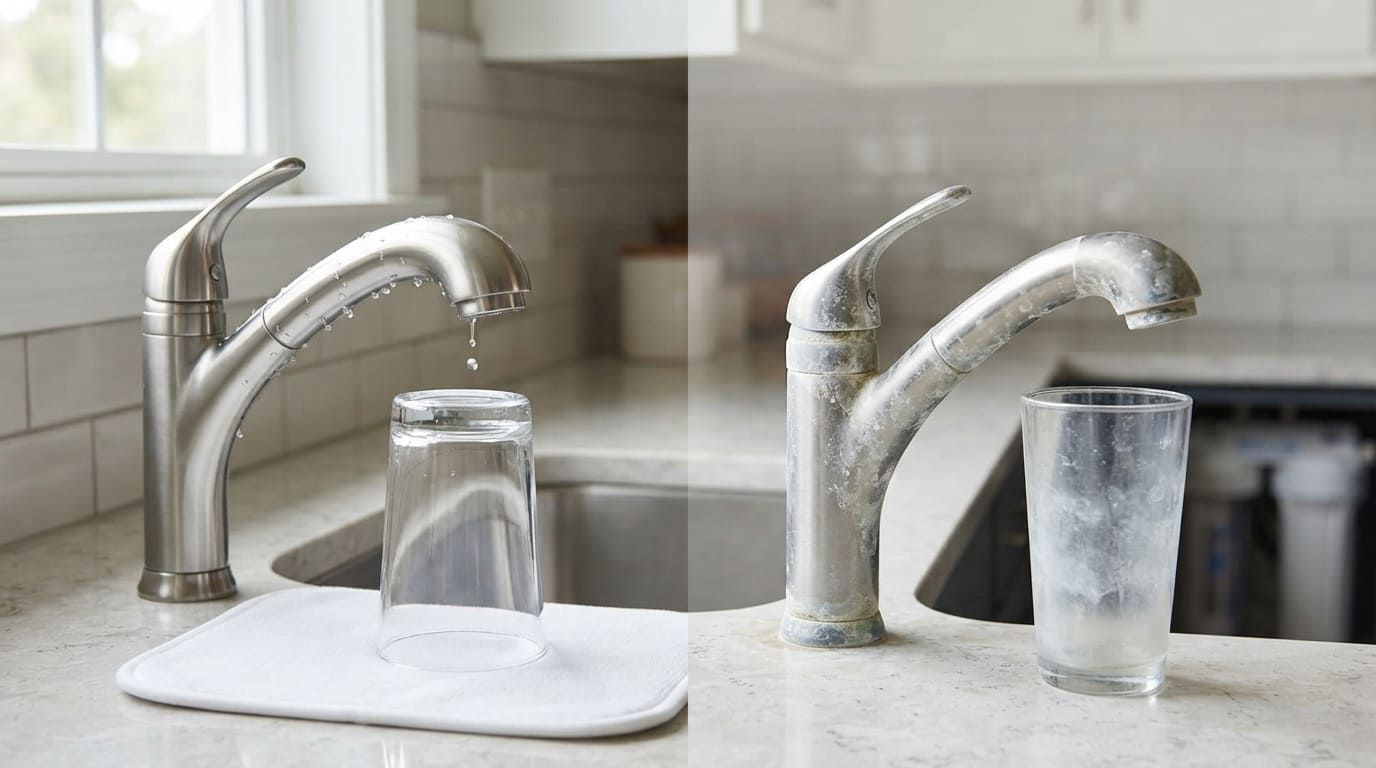
Installing a water softener should help reduce calcium and magnesium, the minerals responsible for water hardness. However, some New Berlin homeowners may continue to notice spots on glassware, residue on fixtures, or changes in how water feels during a shower.
These symptoms do not always mean the softener has failed. The system may need maintenance, the settings may be incorrect, or the visible residue may have another cause.
New Berlin receives municipal water supplied by Milwaukee Water Works. However, water conditions inside a home can vary, and the best way to determine whether hardness remains is to test the water at the tap.
Check the Salt Level in Your Brine Tank
Salt based water softeners use salt to prepare the brine needed to recharge the resin inside the system. If the tank runs low on salt, the softener may not regenerate properly, allowing hardness minerals to pass through.
Open the brine tank and check whether the salt level is appropriate for your equipment. Follow the manufacturer's instructions for the recommended salt level and type.
Adding salt may solve the problem if the tank is empty, but it will not correct every issue. If the salt level appears normal and the water remains hard, inspect the system for other possible causes.
Look for a Salt Bridge
A salt bridge forms when a hard crust develops above an empty space inside the brine tank. The tank may appear to contain plenty of salt, but the salt cannot dissolve properly to create the brine needed for regeneration.
To check for a salt bridge, follow the manufacturer's inspection instructions and avoid damaging the tank or its components. If a bridge is present, carefully break it up using a method approved for your system. Do not use sharp tools that could damage the equipment.
If the bridge keeps returning, review the salt type, tank conditions, and maintenance schedule. Persistent problems may require professional service.
Make Sure the Bypass Valve Is Set Correctly
Many water softeners have a bypass valve that allows water to flow around the system during repairs or maintenance. If the valve remains in bypass mode, water may reach your faucets without being softened.
Check the valve position using the instructions for your specific model. If you recently had plumbing work, replaced equipment, or performed maintenance, the valve may have been moved accidentally.
Do not force a stuck valve. If its position is unclear or it appears damaged, ask a qualified technician to inspect it.
Check Whether the System Is Regenerating
During regeneration, the softener cleans and recharges its resin so it can continue removing hardness minerals. If regeneration is disabled, scheduled incorrectly, or interrupted, the system may eventually lose its ability to soften water effectively.
Review the control settings and confirm that the clock, regeneration schedule, and water hardness setting are correct. A power interruption may have changed the clock or settings on some models.
Household water use also matters. A system that is too small for the number of people in the home may run out of softening capacity between regeneration cycles. A technician can determine whether the settings or system size need adjustment.
Consider Worn Resin or Other Equipment Problems
The resin inside a water softener is responsible for exchanging hardness minerals for sodium or potassium ions. Over time, resin can become less effective because of age, contamination, or unsuitable water conditions.
A worn resin bed, malfunctioning control valve, blocked injector, or other internal problem can prevent the system from working correctly even when the salt level looks normal.
These issues are harder to diagnose without inspecting the equipment. If basic checks do not solve the problem, arrange a service visit rather than replacing parts without confirming the cause.
Confirm the Problem With a Water Hardness Test
Water spots and soap residue can have several causes, so appearance alone cannot confirm that your softener is failing.
Test the water entering your home and compare it with the water leaving the softener. If the untreated water is hard but the treated water has substantially lower hardness, the system may be working as intended.
If both samples show similar hardness, the softener may be bypassed, incorrectly configured, or experiencing a mechanical problem. If treated water tests soft but residue remains, consider other explanations such as detergent buildup, cleaning products, or deposits left behind from previous hard water use.
Testing helps narrow down the problem before you spend money on repairs or replacement equipment.
Keep Your New Berlin Water Softener Working Properly
Routine maintenance can help prevent many common softener problems. Check the salt level regularly, keep the brine tank clean according to the manufacturer's guidance, review the regeneration settings, and investigate changes in water quality promptly.
New Berlin homeowners who continue to experience hard water symptoms should have their water tested and their equipment inspected before deciding that a new system is necessary.
New Berlin Water Softener helps homeowners in New Berlin, WI understand their water softening options and identify possible causes of ongoing hardness problems. Start with a water test and a basic system inspection to determine the most appropriate next step for your home.